Mittelschmerz Symptoms and causes
Overview
Mittelschmerz is one-sided lower belly pain. It occurs with ovulation. German for "middle pain," mittelschmerz occurs midway through a menstrual cycle. That's about 14 days before your next menstrual period.
In most people, mittelschmerz doesn't require medical attention. For minor mittelschmerz discomfort, pain relievers you can buy without a prescription and home remedies are often effective. If the pain really bothers you, your healthcare professional may have you try birth control pills, also called oral contraceptives, to stop ovulation and prevent midcycle pain.
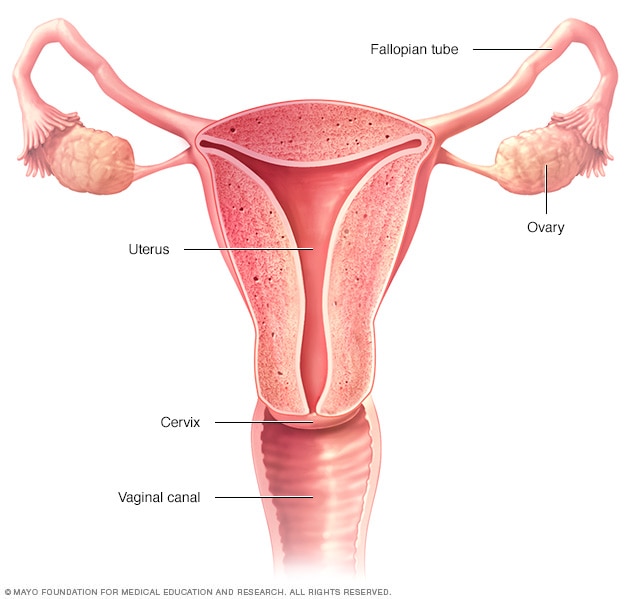
Female reproductive system
The ovaries, fallopian tubes, uterus, cervix and vagina, also called the vaginal canal, make up the female reproductive system.
Symptoms
Mittelschmerz often lasts a few minutes to a few hours, but sometimes it lasts for as long as a day or two. The pain of mittelschmerz may be:
- On one side of the lower belly.
- Dull and achy, like menstrual cramps.
- Sharp and sudden.
- Present with slight vaginal bleeding or discharge.
- Severe, rarely.
Mittelschmerz occurs on the same side of your body as the ovary that's releasing an egg during a process called ovulation. The pain may switch sides from month to month, or you may feel pain on the same side for a few months in a row.
Keep track of your menstrual cycle for a few months and note when you feel lower belly pain. If it happens midcycle and goes away without treatment, it's most likely mittelschmerz.
When to see a doctor
Mittelschmerz rarely needs medical treatment. But contact your healthcare professional if new pelvic pain becomes severe, if it includes nausea or fever, or if it doesn't go away. Any of these symptoms could mean that you have a condition that's more serious than mittelschmerz. For example, pelvic pain can be due to appendicitis, pelvic inflammatory disease or even an ectopic pregnancy, which happens when an embryo implants and grows outside of the uterus.
Causes
Mittelschmerz occurs during ovulation, when a follicle on the ovary ruptures and releases its egg. Some people have mittelschmerz every month; others have it only sometimes.
The exact cause of mittelschmerz is not known. Possible reasons for the pain include:
- Follicle growth that stretches the ovary surface just before an egg is released with ovulation.
- Blood or fluid released from a ruptured follicle that irritates the tissue lining the stomach area, called the peritoneum.
Pain at any other point in the menstrual cycle isn't mittelschmerz. If pain occurs during your period, it may be typical menstrual cramping called dysmenorrhea. Other stomach or pelvic conditions also may cause pain. If you have bad pain, see a healthcare professional.
Risk factors
Mittelschmerz has no clear risk factors. But it may be more likely to happen between the ages of 15 and 25.
Women’s health topics – straight to your inbox
Complications
Mittelschmerz doesn't lead to other health conditions, also called complications. The pain often goes away on its own or with medicine or home remedies.
Prevention
Mittelschmerz can't be prevented. It's linked to natural changes in the body that happen during the menstrual cycle.
CON-20375111
Mayo Clinic does not endorse companies or products. Advertising revenue supports our not-for-profit mission.
Advertising & Sponsorship
Mayo Clinic Press
Check out these best-sellers and special offers on books and newsletters from Mayo Clinic Press.
